


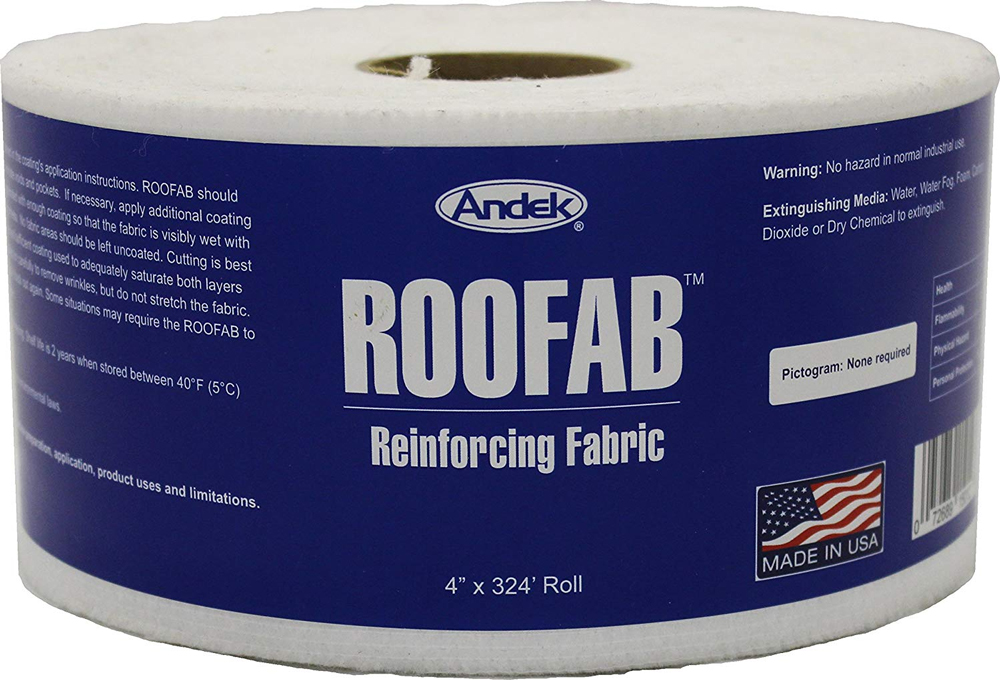
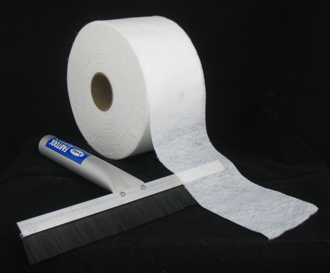
Description


ROOFAB
High-Strength Reinforcing Fabric for Liquid-Applied Systems
ROOFAB is an extremely strong, stitchbonded polyester reinforcing fabric engineered for use with liquid-applied coatings. Designed to be embedded during application, it enhances membrane strength, distributes stress, and improves long-term durability.
When saturated, ROOFAB integrates with the coating to form a tough, reinforced composite membrane with exceptional tensile strength, tear resistance, and elongation. It saturates quickly and evenly without absorbing excessive coating, ensuring efficient application and consistent system performance.
Once embedded, ROOFAB reinforces the cured membrane to withstand movement, thermal cycling, and environmental stress. It remains flexible and tough at low temperatures, resists thermal shock from rapid temperature changes, and will not embrittle, shatter, or lose strength over time. Additionally, it resists microbiological and fungal attack, ensuring long-term performance without rotting or degradation.
Outstanding Features
- Reinforced Composite Performance
Chemically integrates with coatings to form a strong, structural membrane. - High Strength & Durability
Exceptional tensile, tear, and elongation properties for demanding applications. - Efficient Saturation
Saturates quickly and evenly without excessive coating absorption. - Flexible in All Conditions
Maintains toughness and flexibility at low temperatures. - Thermal Shock Resistance
Withstands rapid temperature changes without damage. - Long-Term Stability
Will not embrittle, shatter, or lose strength under environmental extremes. - Biological Resistance
Resists microbiological and fungal attack; will not rot. - Versatile Sizing
Available in roll widths from 4” to 40” to suit various applications.
Fabric Type
Stitchbonded Polyester
Key Benefits
- Reinforced Composite Performance – Chemically integrates with coatings to form a strong, structural membrane.
- High Strength & Durability – Exceptional tensile, tear, and elongation properties for demanding applications.
- Efficient Saturation – Saturates quickly and evenly without excessive coating absorption.
- Flexible in All Conditions – Maintains toughness and flexibility at low temperatures.
- Thermal Shock Resistance – Withstands rapid temperature changes without damage.
- Long-Term Stability – Will not embrittle, shatter, or lose strength under environmental extremes.
- Biological Resistance – Resists microbiological and fungal attack; will not rot.
- Versatile Sizing – Available in roll widths from 4” to 40” to suit various applications.
ROOFAB Application Guidelines
- When installing ROOFAB, position the shiny side facing upward and the flat, more absorbent side facing downward against the substrate.
- Begin by properly preparing the substrate. Apply a coat of liquid roof coating in accordance with the manufacturer’s application instructions. While the coating is still wet, unroll ROOFAB and embed it into the coating, ensuring sufficient material is applied to fully saturate the fabric from below.
- Carefully work the fabric into the coating to eliminate any voids or air pockets. Use a brush or roller to press the coating up into the ROOFAB, ensuring complete saturation. The fabric must be visibly wet on both the top and bottom surfaces to achieve a proper bond and watertight seal. No areas of the fabric should remain uncoated.
- ROOFAB can be cut to size using scissors. When installing full-width rolls, overlap adjacent sections by a minimum of 2 inches. Apply enough coating to fully saturate both layers at overlaps and prevent defects such as fishmouths.
- If wrinkles occur after saturation, gently pull the fabric to smooth them out, taking care not to stretch the material. When working around corners, cut the fabric to fit rather than relying on its elasticity, as this may cause it to pull away from the surface.
- In certain applications, it may be necessary to temporarily anchor the ROOFAB with staples while the coating cures to prevent movement or slippage.
Limitations
Do not walk on newly installed ROOFAB until the coating has fully cured.
All ROOFAB must be completely coated—no exposed or uncoated areas should remain.
Maintenance
Damaged areas can be repaired by cutting ROOFAB to the appropriate size and shape for the repair. Apply fresh coating (or primer and coating, as required) to the prepared area, then embed the ROOFAB into the wet coating. Immediately apply a topcoat over the repair to fully seal the fabric. Allow the repair to cure completely.
ROOFAB Technical Data
| Weight | 3 ounces per square yard | ASTM D3776-96 |
| Thickness | 0.015 perms | |
| Ball bursting strength/lb | 69 | ASTM D3786-01 |
| Tensile (Grab) | 73/42 | ASTM D5034-95 |
| Tear (Trapezoid) | 17 x 26 | ASTM D5587-03 |
| Elongation at Break | Up to 20% | ASTM D5034-95 |